





10 Key Features to Look for in Manufacturing Apps
Manufacturing businesses need to manage production, materials, inventory, procurement, employees, suppliers, and daily operations at the same time. When these activities are handled using spreadsheets, paper records, or disconnected systems, it can become difficult to maintain accurate information and respond quickly to changes.
Manufacturing apps help businesses bring important operational activities into one digital system. Depending on the business requirements, a manufacturing app can support production planning, inventory management, procurement, approvals, reporting, and real-time operational visibility.
But not every manufacturing application offers the same features. Before choosing a solution, businesses should consider how well it supports their existing workflows and whether it can scale as operations grow.
Here are 10 key features to look for in manufacturing apps.
1. Production Management
Production management is one of the most important capabilities of a manufacturing application.
A useful manufacturing app should help businesses organize production activities, track manufacturing orders, monitor production progress, and manage materials required for production.
Instead of relying on separate spreadsheets or manual updates, production teams can work with centralized information.
Key capabilities may include:
- Production order management
- Production planning
- Work order tracking
- Material requirements
- Production status updates
- Production history
- Finished goods tracking
This gives managers better visibility into what is planned, what is in progress, and what has been completed.
2. Inventory and Material Management
Manufacturing depends heavily on the availability of raw materials, components, work-in-progress items, and finished products.
A manufacturing app should provide accurate inventory information and help businesses track material movement throughout their operations.
Useful inventory features include:
- Stock level monitoring
- Raw material tracking
- Finished goods management
- Stock transfers
- Material consumption
- Reordering
- Warehouse management
- Inventory reports
Connecting inventory information with production and procurement can also help reduce unnecessary manual data entry.
3. Procurement Management
Manufacturing businesses frequently purchase raw materials, components, equipment, and other supplies from multiple vendors.
A manufacturing app with procurement capabilities can help manage the purchasing process from request to order.
Important procurement functions can include:
- Purchase requests
- Supplier management
- RFQ management
- Vendor quotation comparison
- Purchase orders
- Approval workflows
- Purchase tracking
- Procurement reports
For businesses that need stronger coordination between purchasing, inventory, and production, integrated procurement can be particularly useful.
4. Purchase Approval Workflows
Manufacturing purchases often require approval from managers, department heads, finance teams, or other authorized employees.
An approval workflow can help businesses define who needs to approve a request and when.
For example:
Purchase Request → Manager Approval → Procurement → Supplier → Purchase Order
Digital approval workflows can reduce unnecessary delays and provide a record of who approved each transaction.
This is especially useful for businesses managing multiple departments, locations, or purchasing teams.
5. Real-Time Business Visibility
Manufacturing managers need current information to make operational decisions.
A good manufacturing application should provide visibility into areas such as:
- Current inventory
- Open purchase orders
- Production status
- Pending approvals
- Supplier activities
- Material requirements
- Procurement spending
- Operational performance
Dashboards and reports can bring this information together so managers do not have to collect data manually from different teams.
6. Mobile Access
Manufacturing operations do not always happen at a desk.
Production supervisors, warehouse teams, procurement employees, and managers may need to access information while working on the shop floor, warehouse, office, or at another location.
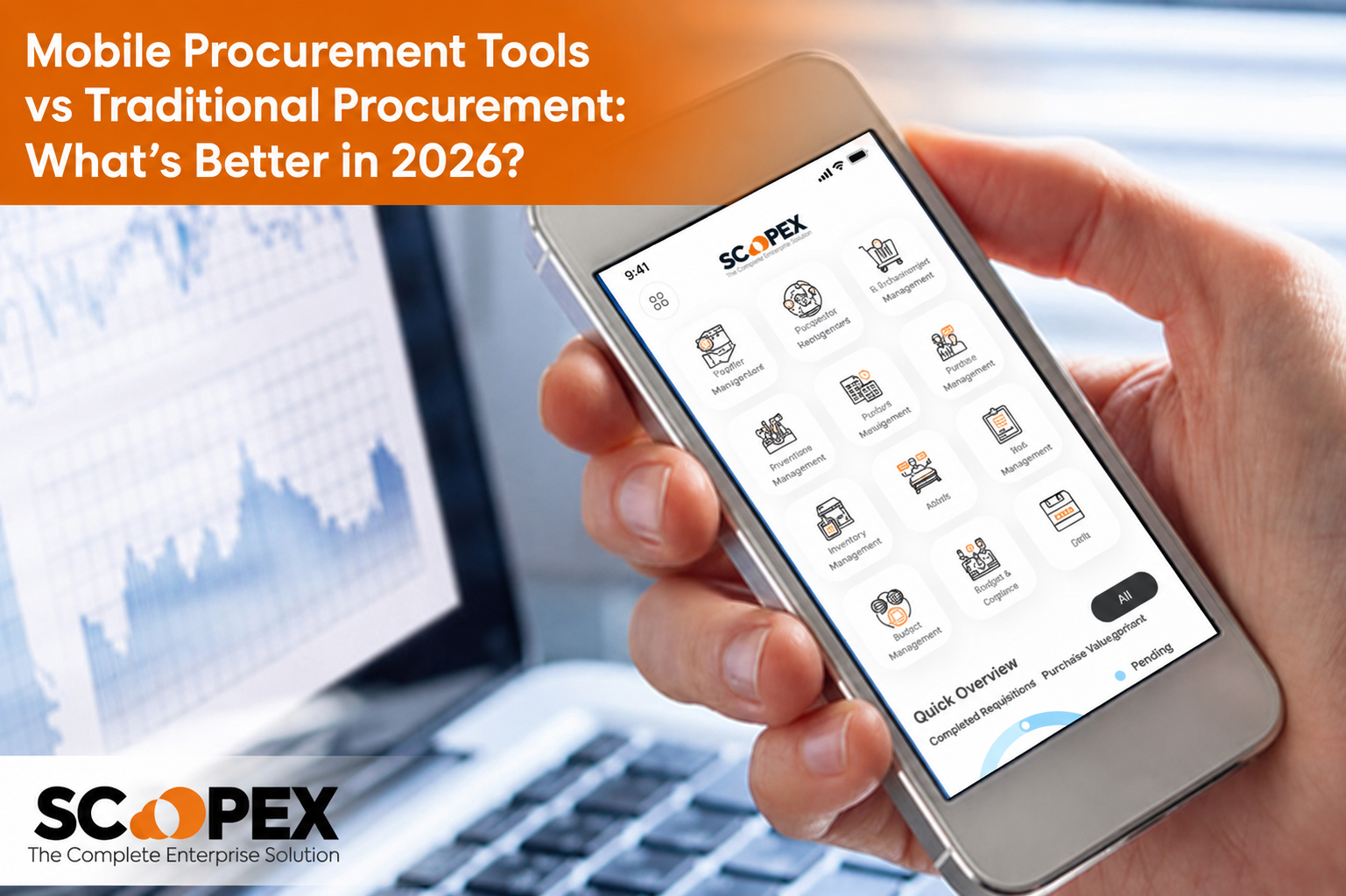
A mobile manufacturing app can provide access to important information through smartphones or tablets.
Depending on the system, users may be able to:
- Check stock information
- Submit purchase requests
- Approve transactions
- Review purchase orders
- Track production activities
- Access reports
- Receive notifications
Mobile access can make manufacturing workflows more flexible and responsive.
7. Barcode and QR Code Support
Manual inventory entry can take time and may lead to data-entry mistakes.
Manufacturing apps with barcode and QR code scanning can simplify the identification and movement of materials and products.
Businesses can use scanning for activities such as:
- Receiving materials
- Stock transfers
- Inventory checks
- Product identification
- Goods receipt
- Warehouse operations
- Finished goods tracking
This can make inventory-related processes faster and easier for operational teams.
8. Reports and Analytics
Data is useful only when businesses can turn it into actionable information.
Manufacturing apps should provide reports that help managers understand operational performance.
Useful reports may cover:
- Production performance
- Inventory levels
- Purchase orders
- Supplier activity
- Procurement spending
- Material consumption
- Pending approvals
- Stock movement
Analytics can help identify operational patterns and areas that require attention.
For example, a manager may identify frequently purchased materials, delayed procurement activities, or inventory items that require closer monitoring.
9. ERP and Business System Integration
Manufacturing rarely operates as an isolated function. It is connected with procurement, inventory, finance, sales, HR, and other business processes.
Therefore, integration is an important consideration when selecting a manufacturing application.
A manufacturing app should ideally support integration with relevant business systems and ERP platforms.
Integration can help synchronize information between departments and reduce duplicate data entry.
For example:
Procurement → Inventory → Production → Finished Goods → Sales
When these processes are connected, businesses can maintain a more consistent flow of information across operations.
10. Scalability and Customizable Workflows
Manufacturing processes can change as a company grows.
A small manufacturing company may initially have simple approval and purchasing processes. As the company expands, it may require multiple warehouses, departments, locations, suppliers, and approval levels.
The manufacturing application should therefore be flexible enough to support changing requirements.
Look for capabilities such as:
- Custom approval workflows
- Multiple users and roles
- Multi-location support
- Configurable processes
- Department-level controls
- Custom reports
- Integration options
- Scalable infrastructure
Choosing a flexible system can reduce the need to replace the application when business requirements change.
How Manufacturing Apps Improve Business Operations
A well-designed manufacturing application can connect several operational processes within a single digital environment.
For example, a business may receive a requirement for raw materials. The team can create a purchase request, send it through an approval workflow, collect supplier quotations, select a supplier, create a purchase order, receive the materials, update inventory, and make the materials available for production.
This creates a connected workflow instead of managing every activity separately.
Manufacturing apps can help businesses improve:
- Operational visibility
- Production coordination
- Inventory control
- Procurement efficiency
- Approval management
- Data accuracy
- Reporting
- Team collaboration
The exact benefits depend on the features implemented and how well the application matches the company’s existing processes.
Why Mobile Manufacturing Apps Matter
Mobile access is becoming increasingly useful for manufacturing teams.
Employees do not always need to return to a desktop computer to check information or complete a task. With a mobile manufacturing application, authorized users can access relevant business information from different areas of the organization.
For example, a production supervisor can check an order status, a warehouse employee can review inventory information, and a manager can approve a purchase request from a mobile device.
This can make day-to-day manufacturing operations more connected and responsive.
Manufacturing Apps for Connected Business Operations
Manufacturing businesses need more than production tracking alone. Procurement, inventory, supplier management, approvals, and reporting are closely connected to manufacturing operations.
A manufacturing application that brings these processes together can help businesses create a more organized and transparent workflow.
Scopex supports business processes such as procurement, purchase requests, RFQs, supplier management, purchase orders, approval workflows, inventory-related activities, dashboards, reports, and analytics. Businesses can use these capabilities to create more connected procurement and operational workflows.
Learn more about Scopex and its business management capabilities.
Frequently Asked Questions
Manufacturing apps are software applications designed to help businesses manage manufacturing-related operations digitally. Depending on the solution, they can support production, inventory, procurement, approvals, reporting, supplier management, and other business processes.
Yes. Many modern manufacturing applications provide mobile access through smartphones or tablets. Mobile functionality can help production, warehouse, procurement, and management teams access relevant information while working away from a desktop.
Many manufacturing applications can integrate with ERP and other business systems. The available integration options depend on the specific software and technical requirements.
Manufacturing apps can centralize information about production orders, materials, inventory, procurement, and operational activities. Dashboards and reports can then provide managers with a clearer view of current business operations.